-
Listening to the Market Mode
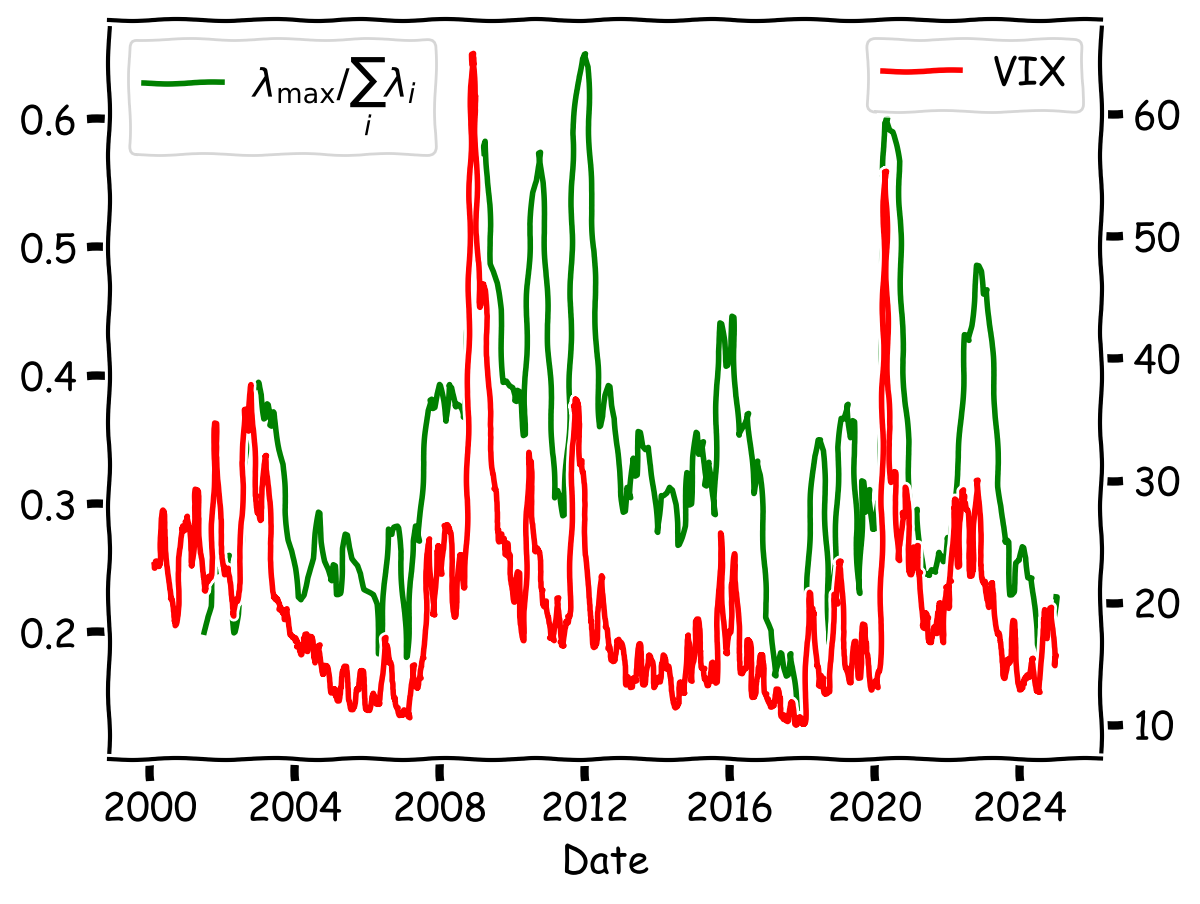
TL;DR: Performing PCA on returns amounts to constructing a statistical factor model. The largest eigenvalue corresponds to the market mode and far outweighs the other factors. Thus, one can perform rolling PCA on equities' returns to monitor the market risk over time.
-
Jeffreys' Prior in Bayesian Inference
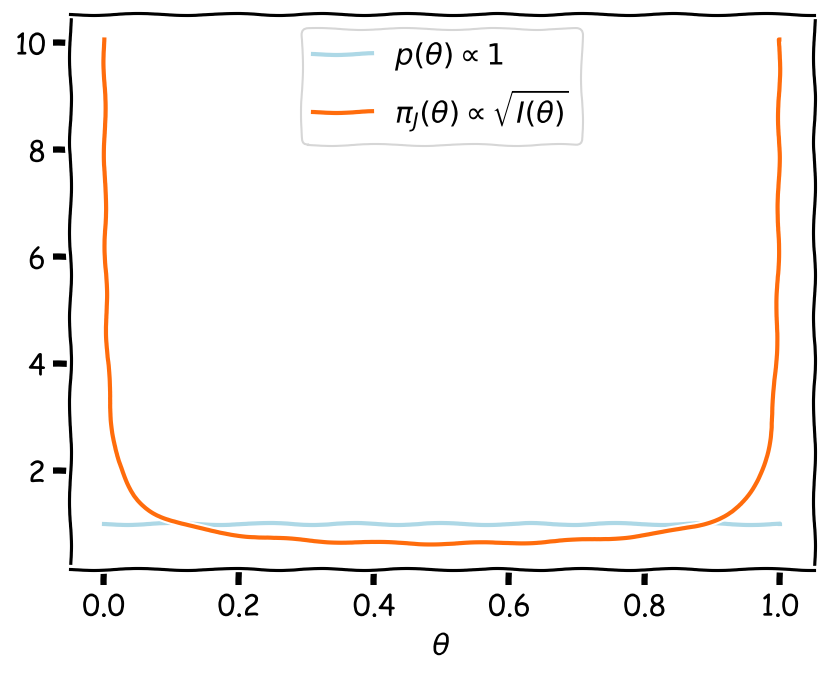
TL;DR: Bayesian inference requires us to specify a prior distribution. When we're unsure what prior to pick and want to stay as objective as possible, one option is to use Jeffreys' prior, which leverages the Fisher information to provide a reparametrization-invariant prior.
-
Regression Dilution
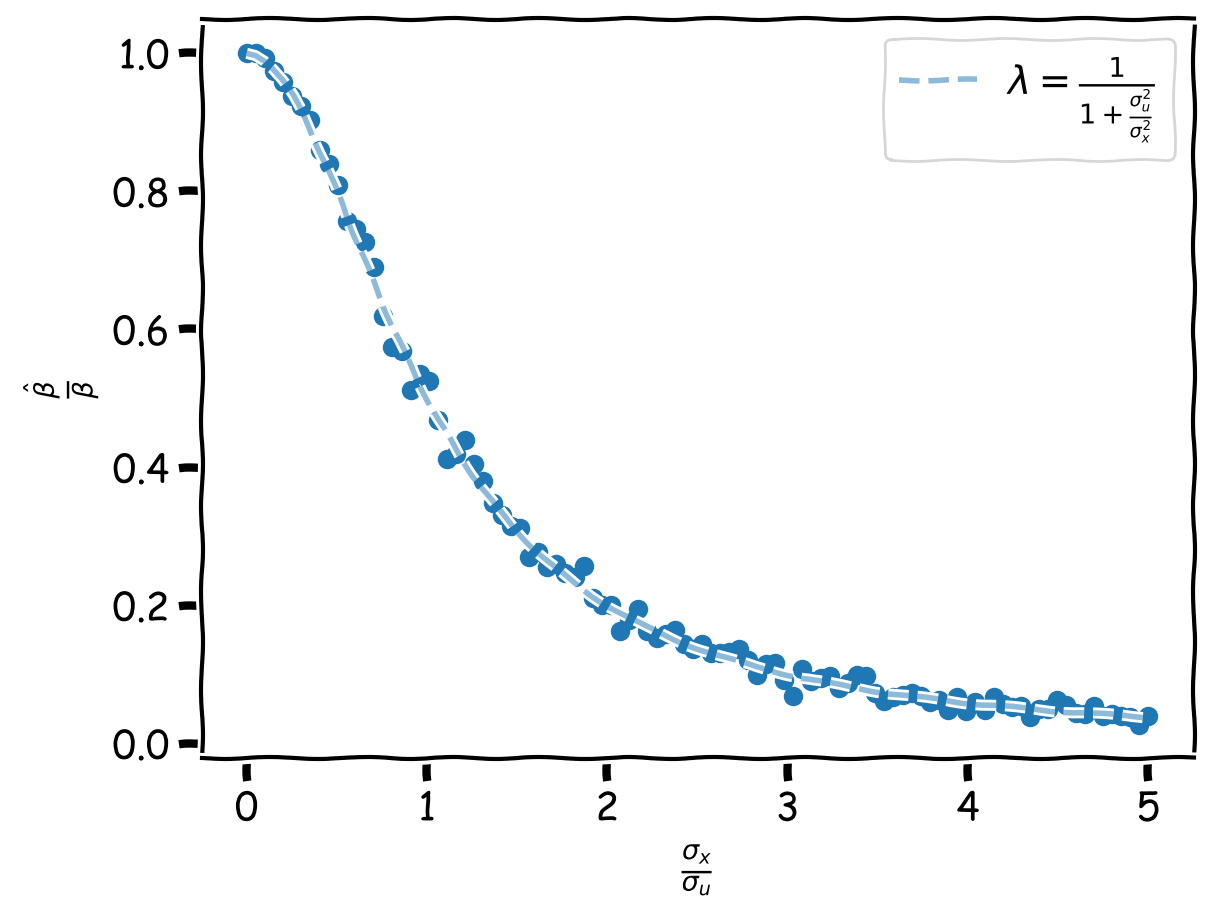
TL;DR: When covariates in linear regression are subject to noise, the estimated regression coefficients shrink towards zero. We derive this effect mathematically and illustrate it with simulations.
-
A geodesic from cat to dog
TL;DR: Entropic regularization relaxes the Kantorovitch problem into a strictly convex problem which can be solved efficiently with the Sinkhorn algorithm. We can use this to efficiently compute Wasserstein distances, barycenters, and finally geodesics between distributions.

-
Solving the assignement problem using Optimal Transport
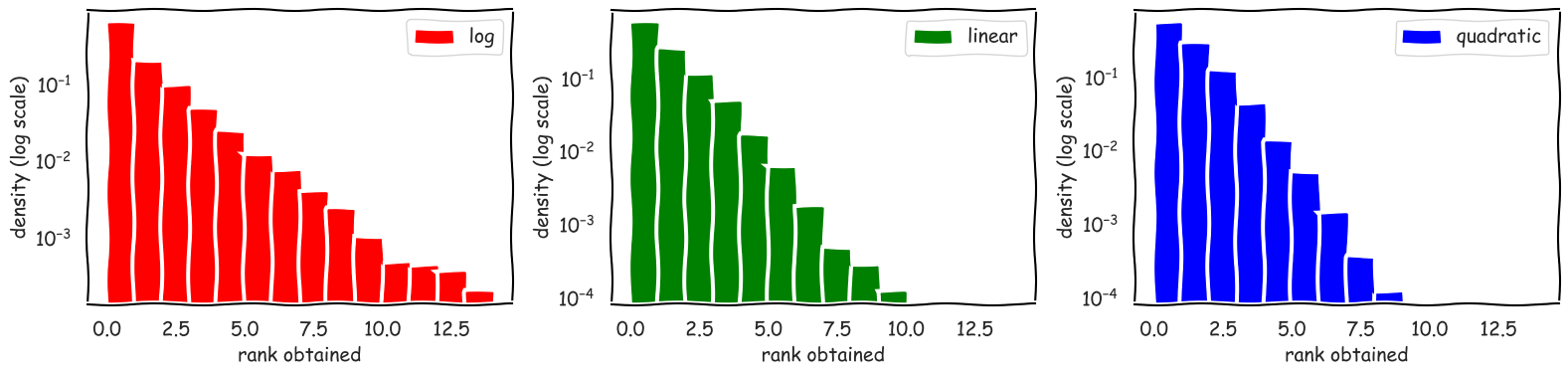
TL;DR: The discrete Kantorovich problem amounts to a LP problem. In the uniform case, the solution is a permutation matrix which in fact solves the assignement problem.
-
Intuitions behind Benford's Law
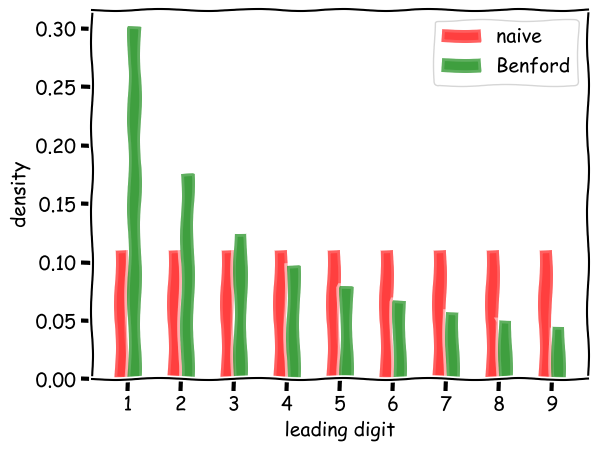
TL;DR: Many real-world datasets follow Benford's Law, which states that distribution of the first digit is not uniform. We provide three different intuitions behind this phenomenon.
-
The case against leveraged ETFs
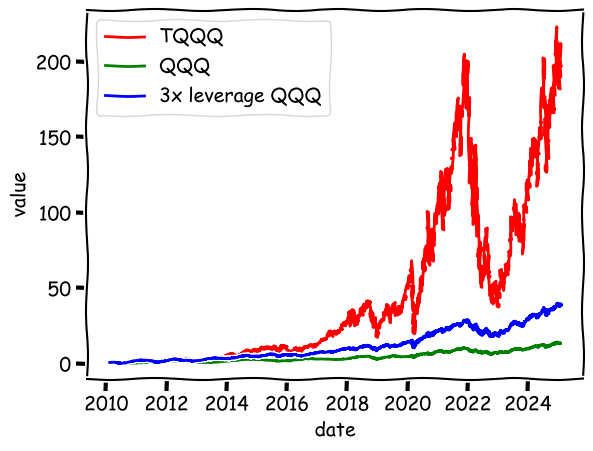
TL;DR: Leveraged ETFs amplify daily returns, which is not the same as basic leverage, especially in the long term. Digging into the math reveals that leveraged ETFs are not suitable buy-and-hold investments as they 1) exhibit huge price swings 2) incur a volatility drag.